Public health campaigns—such as vaccination, vitamin A supplementation, bed net distribution, or integrated outreach—require precise planning, tight coordination, and timely access to reliable field data. Yet many campaigns still rely on paper-based microplans, disconnected digital tools, and delayed reporting, limiting their ability to adapt during implementation and to accurately measure coverage.
IASO supports the integrated digitalization of campaigns end to end, from geographic data management and microplanning to field delivery, supervision, and monitoring.
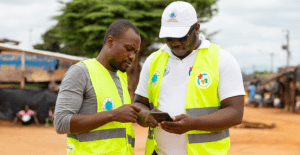
A shared georegistry and data foundation
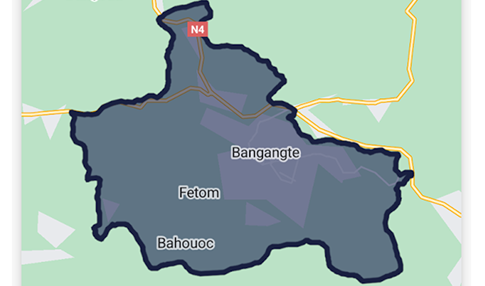
IASO provides a structured georegistry that manages administrative units, operational areas, health facilities, and other reference entities used throughout campaign workflows. This shared data foundation supports the configuration of single hierarchies, master lists, and geographic attributes, ensuring consistency across enumeration, microplanning, delivery, and monitoring activities.
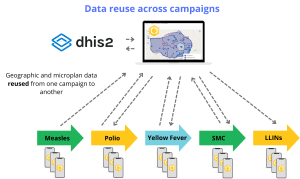
By serving as a common reference layer, IASO addresses one of the key requirements for integrated campaign digitalization: the use of shared data registries that can be reused across campaigns and connected to other national systems.
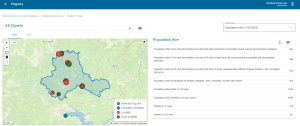
Digital enumeration and population targeting
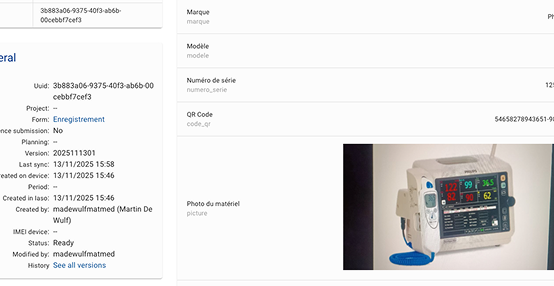
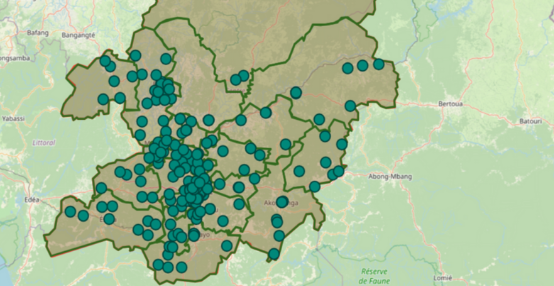
IASO supports digital enumeration of households, individuals, facilities, and other campaign-relevant objects, with or without geolocation. Enumeration data can be collected in the field using mobile devices, reviewed and validated centrally, and reused across multiple campaign phases.
This capability aligns with recommended campaign workflows for enumeration and population estimation, enabling campaigns to build reliable denominators and link enumerated objects to administrative or operational units in a consistent way.
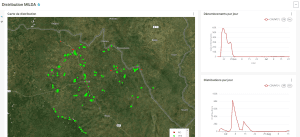
Digital microplanning grounded in geography
IASO enables digital microplanning using georeferenced master lists, population estimates, and accessibility data. Campaign teams can define target areas, estimate populations, allocate teams, plan routes, and identify hard-to-reach locations using spatially grounded information.
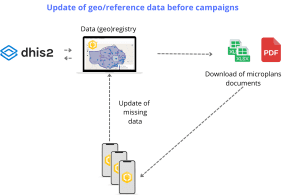
Microplans can be updated during implementation, preserving traceability while allowing rapid adaptation—an essential requirement for integrated, data-driven campaign management.
Task assignment, delivery, and supportive supervision
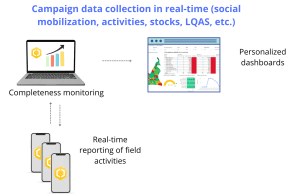
IASO supports the assignment and scheduling of campaign tasks to teams or individuals, linking each task to specific locations and operational units. Field teams can access their assignments on mobile devices, work offline where needed, and report progress directly from the field.
Supervisors and managers can monitor delivery in near real time, provide supportive supervision, and guide corrective actions based on emerging data—reflecting recommended workflows for campaign delivery, monitoring, and response.
Real-time monitoring, dashboards, and data-to-action
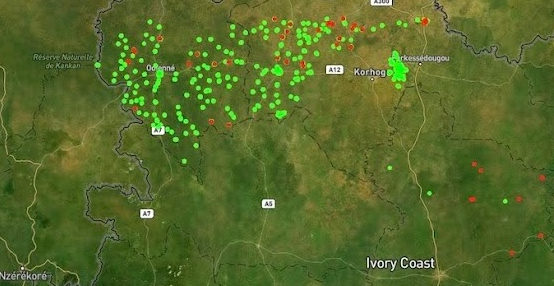
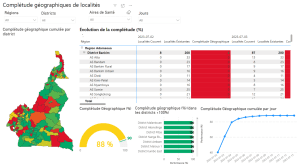
Data collected through IASO feeds into dashboards that track implementation status, coverage indicators, and geographic gaps at multiple administrative levels. These dashboards support data-to-action approaches, enabling managers to identify underperforming areas, plan mop-up activities, and adjust strategies while the campaign is still ongoing.
This monitoring and response capability directly supports the requirement for real-time visibility and adaptive management highlighted in integrated campaign digitization guidance.
Interoperability with national systems
IASO is designed to complement systems such as DHIS2, enabling synchronization of geographic structures, organizational units, and selected datasets. This interoperability reduces duplication and ensures that campaign data can feed into national reporting, post-campaign analysis, and routine health information systems.
IASO’s API-based architecture supports integration with logistics, payment, and analytics systems, in line with platform-agnostic design principles recommended for campaign digital solutions.
Adaptable across campaign types and contexts
While IASO has been used for vaccination, nutrition, and vector control campaigns, its core building blocks—georegistry, enumeration, microplanning, task management, data validation, and dashboards—are intentionally generic. This allows the same platform to support single-disease or integrated campaigns, national or subnational scopes, and both routine and emergency contexts.
By reusing the same digital foundation across campaigns, countries and partners can reduce fragmentation, strengthen institutional memory, and progressively build sustainable campaign digitalization capacity.
From one-off tools to integrated systems
IASO helps shift campaign digitalization from one-off, vertical tools toward an integrated, reusable system aligned with international best practices. By supporting shared data registries, end-to-end workflows, interoperability, and real-time monitoring, IASO enables more coordinated, responsive, and equitable campaign delivery—helping ensure that no population is left behind.