Factors influencing GPS accuracy on the ground
Before looking at the software, it is essential to understand that GPS performance is primarily a hardware and environmental matter. The accuracy of a coordinate is determined by the quality of the device’s GPS sensor and its ability to communicate with satellite constellations.
The impact of environment and hardware
Weather conditions, such as heavy cloud cover, and physical obstacles like dense forest canopies or high-rise buildings, can deflect or weaken signals. However, the device itself is often the biggest variable. A high-end smartphone will typically achieve a faster and more stable satellite fix than a low-cost tablet. In most standard field conditions, our data shows that users can expect an average accuracy range between 5 and 15 meters.
Optimizing georeferencing through IASO and ODK
While we cannot control the clouds, we can control how the software reacts to them. By leveraging the power of ODK forms within the IASO ecosystem, organizations can implement strict protocols to safeguard spatial data quality.
Enforcing accuracy thresholds in data entry
One of the most effective features for ensuring data integrity is the ability to set a mandatory accuracy threshold. Within a form, you can configure the system to reject any GPS coordinate that does not meet a specific requirement—for example, requiring a precision of less than 10 meters. The data collector is then prompted to wait a few seconds longer for a better signal, ensuring that no “fuzzy” data enters your database.
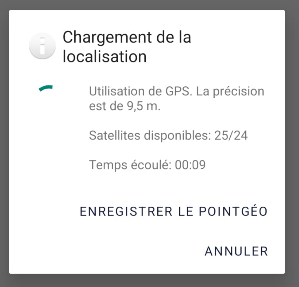
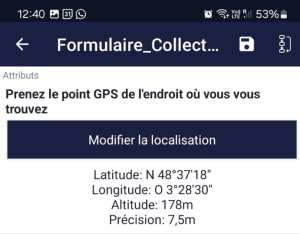
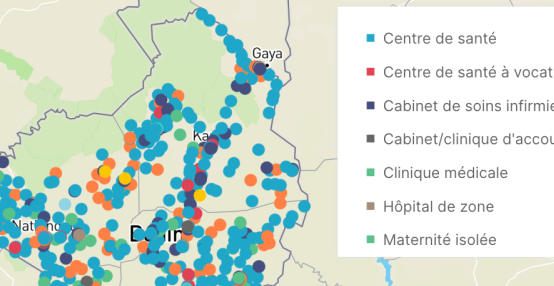
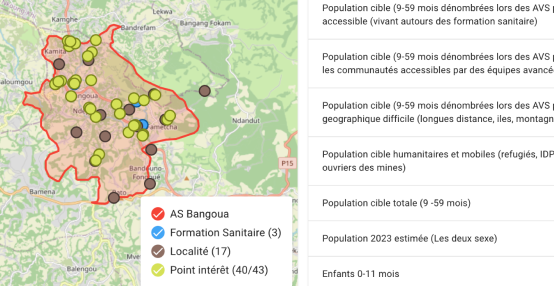
Illustration of GPS reception in IASO
Reliability in numbers
When these best practices are applied, the results are highly consistent. In 95% of cases involving GPS-enabled questions in our recent campaigns, we achieved a GPS precision of less than 10 meters. This level of reliability allows program managers to trust their maps and make informed decisions based on pinpoint-accurate information.
Evidence from the field: high-precision georeferencing in action
The theoretical potential of GPS precision is best demonstrated through large-scale operations. In Western and Central Africa, IASO has been the cornerstone of several campaigns where spatial accuracy was not just a bonus, but a requirement for success.
Ensuring coverage in Côte d’Ivoire
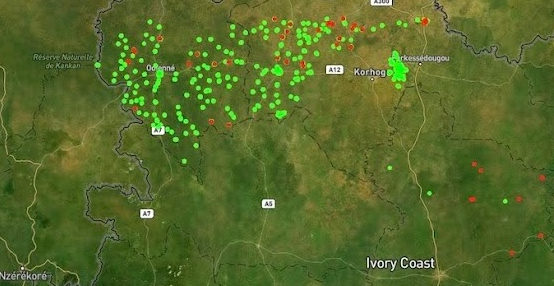
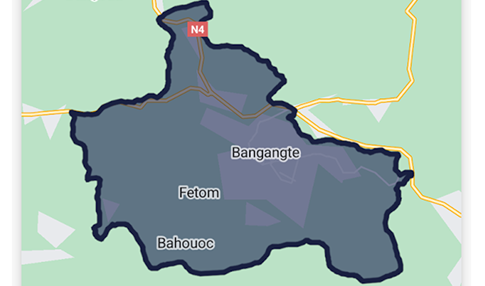
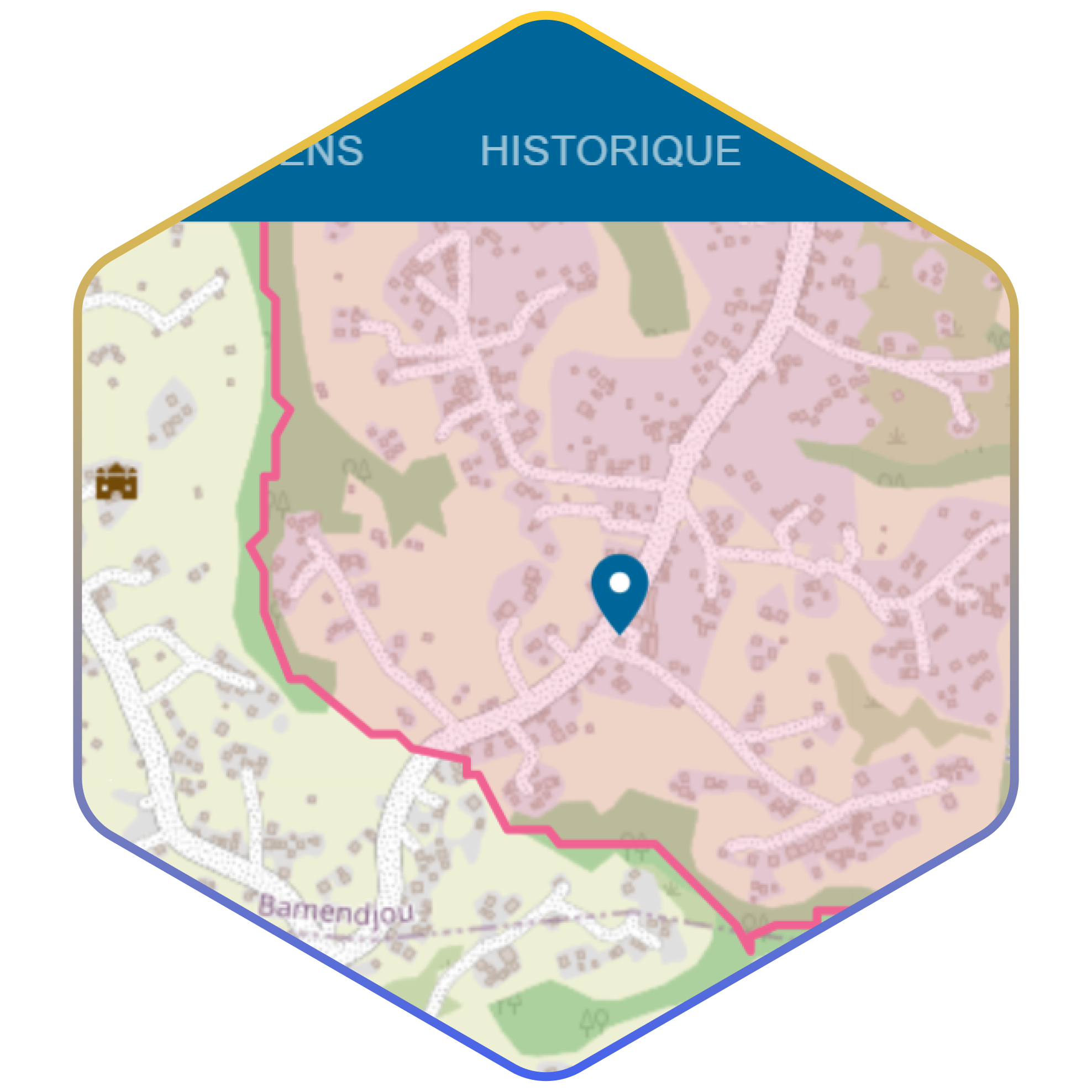
During the 2025 Seasonal Malaria Chemoprevention (SMC) campaign in Côte d’Ivoire, the National Malaria Control Program (PNLP) used IASO to track interventions across four cycles. By implementing data entry protocols that required precise coordinates, the teams ensured that every household reached was accurately mapped. This allowed for real-time monitoring of coverage gaps, transforming raw GPS coordinates into an actionable management tool.
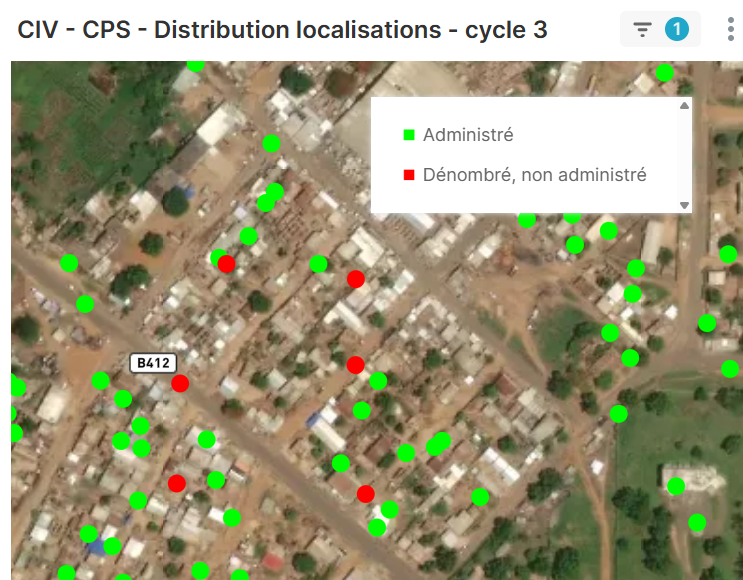
Reaching households on IASO
Reliability benchmarks in Cameroon
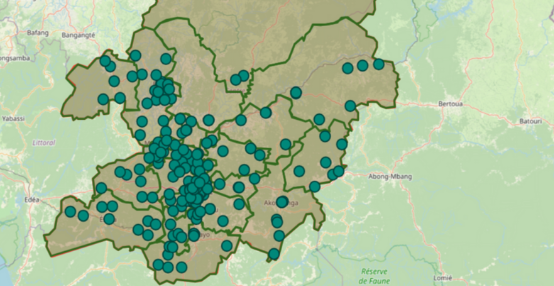
The results from our deployments in Cameroon further validate the robustness of the system. In 95% of cases where GPS data was collected via IASO, the accuracy recorded was under 10 meters. Despite the challenges of varied terrain and fluctuating satellite availability, the combination of capable hardware and IASO’s validation logic consistently delivered high-quality spatial data.
Balancing technology and methodology
Achieving high GPS precision is a collaborative effort between the device, the environment, and the software. While atmospheric conditions and hardware sensors set the physical limits, IASO provides the necessary digital guardrails to ensure that only the most accurate data is recorded. For public health leaders, this means moving beyond simple “data collection” toward true, reliable georeferencing that stands up to the most rigorous analysis.